Conditions & Treatments
Brachymetatarsia Lengthening
Surgical correction for short toe deformity — restoring function, eliminating pain, and improving the natural appearance of your foot.
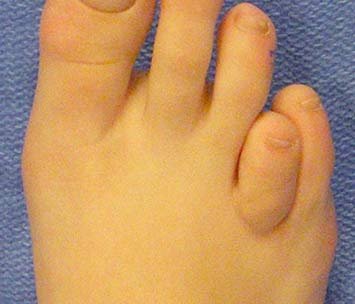
What Is Brachymetatarsia?
Brachymetatarsia is a condition in which one of the five metatarsals — the long bones of the foot connecting the ankle to the toes — is noticeably shorter than the others. The result is a shortened, often elevated toe that sits above the plane of adjacent toes. The condition most commonly affects the fourth metatarsal and occurs in both feet (bilaterally) approximately 72% of the time. When multiple metatarsals are shortened, the condition is called brachymetapody.
Brachymetatarsia typically becomes visually apparent between ages 4 and 15 and affects females approximately 25 times more frequently than males. While congenital — developing before or shortly after birth — patients often seek treatment during adolescence or adulthood when the functional and cosmetic impact becomes significant.
Causes of Brachymetatarsia
The condition results from premature closure of the growth plate (epiphysis) of one metatarsal bone while the remaining metatarsals continue normal growth, creating an increasing length discrepancy over the years of skeletal development.
- Congenital — growth plate closes too early during fetal or early childhood development
- Associated with genetic conditions such as Down syndrome, Turner syndrome, or pseudohypoparathyroidism
- Prior injury or radiation to the foot during childhood (rare acquired cause)
- Idiopathic — no identifiable underlying cause in many cases
Anatomy: The Metatarsal Parabola
In a normally proportioned foot, the metatarsal heads form a smooth curved arc called the metatarsal parabola. When the fourth metatarsal is short, this arc is broken — the toe floats above the ground and the third and fifth metatarsals absorb abnormal load during walking and standing. This imbalance is what produces the calluses, pain, and gait changes patients experience.
Symptoms
- Visible shortened, floating, or elevated toe that does not touch the ground
- Inability to bear appropriate weight through the shortened toe
- Adjacent toes bearing excessive pressure and load
- Thickened calluses on the bottom of the affected toe and neighboring metatarsal heads
- Pain and inflammation in the ball of the foot (metatarsalgia)
- Difficulty finding comfortable footwear
- Self-consciousness; avoidance of open-toed shoes or sandals
Diagnosis
Dr. Ravaei diagnoses brachymetatarsia through clinical examination and weight-bearing X-rays. Precise measurement of the metatarsal length discrepancy and assessment of the metatarsal parabola guides the surgical plan — specifically, how much lengthening is needed to restore normal proportions without creating overcorrection or neurovascular tension in the soft tissues.
Treatment Options
Non-Surgical Management
Conservative measures cannot correct the bone shortening but can manage discomfort:
- Shoes with greater depth or custom-molded toe box to accommodate the elevated toe
- Silicone or foam padding to relieve callus pressure
- Custom orthotics to redistribute plantar pressure
These options are appropriate for patients with mild symptoms or those not yet skeletally mature.
Surgical Lengthening
Surgery is the only permanent correction for brachymetatarsia. Dr. Ravaei selects the technique based on the degree of shortening, the patient's age and anatomy, and the number of bones involved:
- One-Stage Lengthening (preferred for most patients): A single incision is made, the metatarsal is cut (osteotomy), and internal fixation — screws, plate, or wires — is used to achieve immediate lengthening, typically up to 10–15mm. No external hardware to maintain, fastest recovery, single operation. This is Dr. Ravaei's preferred technique for most candidates.
- Gradual Lengthening with External Fixator: An external fixation device is attached through small pins. The patient adjusts it daily (~1mm/day) over several weeks to slowly lengthen the bone. This technique can achieve greater total lengthening and avoids a bone graft donor site, but requires two operations and a longer total recovery.
- Intercalary Bone Graft: Bone harvested from the heel (calcaneus) or a donor bank is inserted between the cut ends of the shortened metatarsal. Single-stage, but requires a second incision site when autograft is used.
Recovery Expectations
- One-stage lengthening: Protected weight-bearing in a surgical boot for 6–8 weeks; return to regular shoes at approximately 10–12 weeks; full activity at 3–4 months
- Gradual lengthening: Active lengthening phase of 3–6 weeks, then bone consolidation of 2–3 months, followed by device removal surgery
- Post-surgical physical therapy is recommended to restore range of motion, reduce swelling, and optimize the final result
Why Choose Dr. Ravaei for Brachymetatarsia Surgery
Dr. Ravaei is a board-certified foot and ankle specialist who has performed over 7,000 surgical procedures. He trained at Temple University, Eglin Air Force Base, and Cooper University Hospital, and served as Chief of Podiatric Surgery at Saint Joseph's Hospital in Los Angeles. Brachymetatarsia correction is technically demanding — outcomes depend heavily on the surgeon's experience with metatarsal osteotomy, internal fixation, and soft tissue management.
Dr. Ravaei offers consultations at five Southern California locations — Beverly Hills, Inglewood, Huntington Beach, Inland Empire, and Wilmington — with same-day appointments available.
Brachymetatarsia FAQ
Brachymetatarsia can cause pain in the metatarsal area because adjacent toes bear excessive weight the short toe cannot support. Calluses, chronic pressure, and difficulty with footwear are common. Some patients are primarily bothered by the cosmetic appearance with minimal pain.
Non-surgical options can manage discomfort but cannot correct the bone shortening. Surgical lengthening is the only permanent solution. Conservative care is appropriate for patients not yet skeletally mature or those with mild symptoms.
Surgery is typically recommended after skeletal maturity — around age 14–16 in girls and 16–18 in boys — to ensure growth plates have closed. Dr. Ravaei evaluates each patient individually for optimal timing.
When brachymetatarsia causes documented functional impairment — pain, calluses, gait abnormalities — many plans including Medicare, Aetna, and Blue Cross/Blue Shield may cover the procedure. Purely cosmetic cases may not be covered. Dr. Ravaei's office will help verify your coverage before treatment.
Brachymetatarsia refers to shortening of a single metatarsal. Brachymetapody describes shortening of multiple metatarsals simultaneously. Both are treated surgically with similar techniques, though multi-bone cases require more extensive planning.
One-stage lengthening requires 6–8 weeks in a surgical boot, return to regular shoes around 10–12 weeks, and full activity at 3–4 months. Gradual lengthening takes several months total. Dr. Ravaei will give you a specific timeline at your consultation.
Correct Your Short Toe Today
Dr. Ravaei is one of Southern California's most experienced podiatric surgeons for brachymetatarsia correction — restoring balance, eliminating pain, and improving the appearance of your feet.